Note: While the breeds in this collection tend to be toy dogs, individual pets will vary. Please consult the adoption organization for details on a specific pet.
Toy dog breeds might be small, but they are known for having outsized personalities. Once a favorite of royal courts in Europe and Asia, they now rule living rooms across America. Compact, cute, and charming— sometimes with a dash of sass thrown in—toy breeds are the consummate companion dogs.
Portable, lively, and eager to please, toy breeds are considered the smallest of all the dog breed groups, with most dogs weighing less than 15 pounds when fully grown. There isn’t a hard and fast number of miniature dog breeds, but the American Kennel Club recognizes 21 breeds in the toy dog group, such as Havanese, Toy Poodles, and Pugs. Today, many dogs are mixed with Toy Poodles to get “designer breeds” such as Cavapoos and Yorkiepoos, expanding the breed group.
It’s important to note that “toy” refers to size, not temperament. Toy breed dogs are not solely lay dogs; there are a lot of different needs and personalities within toy dogs. Here’s everything you need to know if you are considering a toy breed dog.
History of Toy Dogs: What They Were Bred For
If mini dog breeds seem like they give off an air of superiority, it’s because they were originally bred as companion animals for nobility and royalty. They thrive in a life of luxury, swanning about their homes, exploring the outside world with their owners, and going for car rides.
This tiny dog attitude goes back thousands of years. For example, Pekingese Dogs were bred to keep Chinese emperors company. They were so important to the culture that only members of the Chinese imperial court could breed or own them for many years.
Another example is the Cavalier King Charles Spaniel, which is named after King Charles II, who reigned during the 1700s. They started as comfort dogs for Tudor nobility, keeping their owners company in bed on cold winter nights. They are one of the most popular toy breeds today, perhaps doing the same thing!
As the middle class grew and society changed, these breeds became more widely available and popular. They are well-suited to city life thanks to their low physical stimulation needs and small stature. They are excellent companions for a variety of family situations, whether you are an older empty-nest couple, a single person, or a family with young children. They are beloved worldwide for their loving nature and eagerness to please their owners.
Toy Dog Breed Sizes and Coat Types
Many think of miniature dog breeds and think of pint-sized purse dogs, which can be true, as some of the breeds weigh only a couple of pounds when fully grown. The toy dog weight range varies from 2 pounds to 15 pounds, but don’t let their size fool you—they pack a lot of punch into tiny dog bodies.
Tiny dogs might not be able to keep up with you on a hike, but they make up for it by living a long time. Toy dog breeds live on average 12 to 16 years, with some pushing up to 20 years. That is a lot of cuddle hours over time!
Coat types can vary with toy dog breeds:
Smooth Coat Toy Breed
Toy dogs with short and smooth coats include the Chihuahua and the Dachshund. They have lower maintenance grooming needs than other coat varieties.
Long Coat Toy Breed
These breeds have longer hair that flows, often styled in ponytails to keep their eyes clear. Examples include the Maltese, Yorkshire Terrier, and Shih Tzu. You can also cut your long-coated toy dog breed in a puppy cut. That can keep the hair short and out of their faces, but it does require regular grooming every 4 to 6 weeks.
Curly Coat Toy Breed
Some toy breeds have curly hair, such as the Bichon Frise and Toy Poodle. They have higher grooming needs.
Wire Coat Toy Breed
This coat is rough and coarse, as seen in breeds like the Brussels Griffon and the West Highland White Terrier, commonly called a “Westie.”
Double Coat Toy Breed
Some toy breeds have double coats, which consist of a soft undercoat and a coarser outer coat. The Pomeranian and Pekingese are two popular breeds with double coats.
Popular Toy Dog Breeds
The AKC might only recognize 21 toy breeds, but there are many popular mini dog breeds to choose from. In the last 30 years, many dog breeds have been mixed with hypoallergenic ones like Toy Poodles to create loveable, small, and sneeze-free breeds like Maltipoos.
The most popular toy dog breeds include:
- Chihuahua: Spunky, tenacious, and brimming with chutzpah, the Chihuahua’s personality is 10 fold its size. They are loyal, sharp, and confident dogs that enjoy a bit of spice in life.
- Shih Tzu: Warm and open, Shih Tzu dogs are bouncy little fluffballs that look the part of a noble companion dog for a reason—they were bred for Chinese nobility. You’ll know them by their long coats, which are often kept out of their eyes in a ponytail style.
- Pomeranian: Feisty and fluffy, the Pomeranian is a peppy watchdog eager to alert owners to anything they deem suspicious (which is, oftentimes, a lot). Queen Charlotte and Queen Victoria both enjoyed the company of Pomeranians.
- Pug: Enthusiastic and sometimes goofy, the pug is a popular dog these days thanks to their lovable demeanor. They have a notorious stubborn streak, though, so be prepared to mentally go to battle with them.
- Cavalier King Charles Spaniel: Docile and sweet, the Cavalier King Charles Spaniel dog was bred for English nobility and retains some of that regalness even today. Soft, silky coats and gentle, open expressions make these elegant dogs.
- Toy Poodle: Affectionate and wildly smart, toy poodles are the smaller version of the Miniature Poodle and Standard Poodle, weighing between 4 and 6 pounds. Clever and sometimes even witty, they will capture your heart and make you laugh.
- Bichon Frise: Many think the Bichon Frise is French, but they came from Spain’s Canary Islands, where they were kept as companion dogs. Merry, playful, and cuddly, they are defined by their curly coats, which do require quite a bit of grooming maintenance.
- Bolognese: An Italian dog, the Bolognese is a petite, white cotton ball of a canine, related to the Bichon Frise. Sturdy and active, they love to be as close to their companions as possible, which is easy at only 6 to 10 pounds.
- Yorkshire Terrier: Dainty like a lap dog but energetic like a terrier, the “Yorkie” has a lot packed into such a tiny body. They have long, luscious locks worthy of a shampoo commercial. Their hair does require regular maintenance, but the ponytail is optional.
- Havanese: The lively Havanese hails from Cuba, where they were bred to be companion dogs for the upper class. They are clowns and crave attention, which can include destructive behavior if you don’t keep their big brains engaged enough.
- Italian Greyhound: While Greyhounds can weigh up to almost 80 pounds, Italian Greyhounds are miniature, maxing out at 10 pounds. They are elegant, sensitive, and gentle dogs that love to sniff out a scent if given the chance.
- Miniature Pinscher: The “Min Pin” is a compact little terrier dog. They are curious and fearless, which can keep an owner on their toes! They are more active than most toy dog breeds and can be hard-headed and overly curious, so socialization and mental and physical stimulation are key.
- Maltese: The Maltese dog hails from the island of Malta in the Mediterranean and has long had a reputation for being affable, friendly, and outgoing. They love people, are playful, and are devoted to their owners.
- Pekingese: Small but by no means timid, the Pekingese is a confident toy dog breed with the tenacity of a terrier. They are not overly affectionate but do appreciate bonding with their owners and enjoy play time.
- Brussels Griffon: Sure-footed, energetic, and bold, these dogs have outsized personalities. They can be funny and clever, often entertaining their family. They were bred at some point with Pugs, which gives them their unique faces.
- Papillon: “Papillon” means butterfly in French, a nickname given to them to describe their ears. These dogs are delicate, smart, and alert. They are equal parts social butterflies (pun intended) and lap dogs.
- Coton de Tulear: The soft, snowy white, and fluffy coat of the Coton de Tulear gives them a distinctive look. They are happy, easygoing mini companion dogs who love to be with their owners. They are affectionate and smart. Alert without barking excessively, they are generally well-rounded dogs that get along with most people.
- Chinese Crested: The Chinese Crested dog’s appearance would lead one to believe they are sensitive, delicate, and gentle dogs—and that’s entirely correct. They come in two varieties, Powderpuff and Hairless.
- Affenpinscher: Dynamic and fearless, the Affenpinscher can keep an owner busy trying to predict their next move. They are confident and do well with owners who like sidekicks or shadows who constantly follow them around.
- Japanese Chin: This dog’s name is somewhat misleading, as the Japanese Chin is actually of Chinese origin, not Japanese. They are delicate and cat-like dogs that thrive in peaceful environments. Originally bred for the Chinese aristocracy, they became popular in Europe thanks to Queen Victoria.
- Silky Terrier: Petite, graceful, and sophisticated, the Australian Silky Terrier looks very similar to its cousin, the English Yorkshire Terrier. Strong-willed and opinionated, the Silky Terrier likes to make their presence known and insert themselves into the action.
- Manchester Terrier: Sleek and muscular, the Manchester Terrier is an English dog originally bred to be a ratter. They are on the large side of the miniature dog breeds, clocking in around 12 to 15 pounds. Active and game for any adventure, these dogs enjoy being outdoors. Be careful, though, as the breed has digging instincts!
- Toy Fox Terrier: Large pricked ears and wide smiles define the mischievous-looking Toy Fox Terrier. They have an insatiable curiosity and love to entertain.
- Löwchen: The Löwchen has a puppy-like attitude for most of its life, making it a good choice for owners who love to play. They are active little dogs who enjoy doing whatever their owner is doing. They have high grooming needs for their famous “lion-like” appearances.
- English Toy Spaniel: Nicknamed “Charlie Dogs,” these spaniel dogs come in a variety of colors, including Blenheim (red and white), Prince Charles (white, black, and tan), Ruby (solid red), and the most popular, King Charles (black and tan). They are graceful and sophisticated dogs.
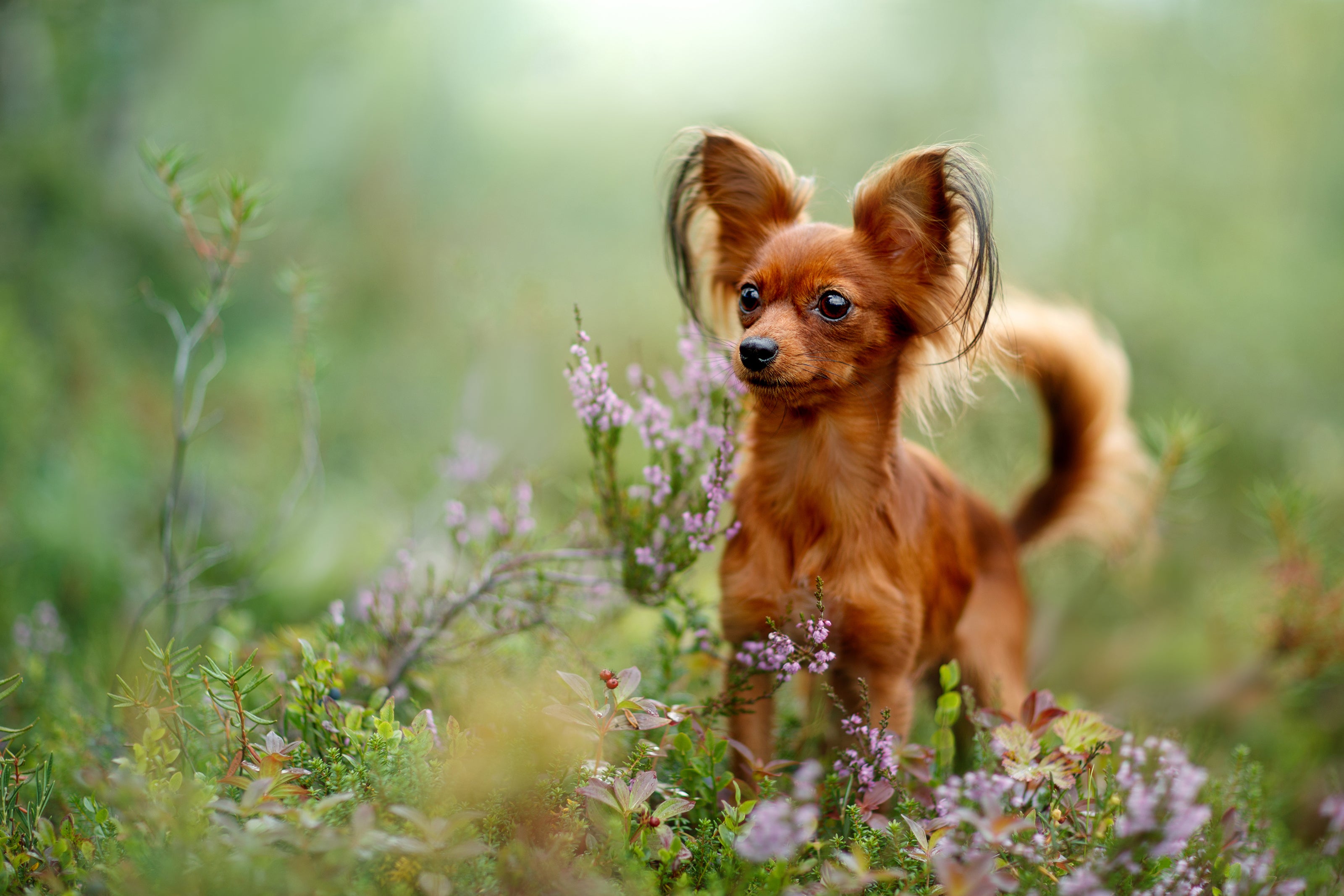
- Russian Toy: The Russian Toy dog has a super glossy, no-fuss coat and large, expressive eyes. They are charming dogs that love being beside their owners, waiting patiently for playtime.
- Australian Terrier: The Australian Terrier’s hair gives them a slightly disheveled appearance, which makes them all the more charming. They are high-spirited, rough-coated terrier dogs that have personality in spades.
How to Choose a Toy Dog, and is This Breed Right For You?
When choosing to adopt a toy breed dog, there are a few things to consider before deciding that this breed group is right for your family.
Grooming
Many toy breeds are considered high-maintenance breeds, but not all. For flowy coats like those found on the Yorkie and Pomeranian, regular brushing prevents tangles. Dogs like Toy Poodles and Bichon Frises need more intensive grooming sessions, likely done by a professional to help prevent matting. Dachshunds need less grooming time thanks to their short, smooth coats.
All mini dog breeds will benefit from regular grooming maintenance such as nail trimming, baths, and brushing. Grooming, especially when it’s more intensive, can be an opportunity for bonding.
Exercise
Toy dogs don’t require a lot of exercise, and they’re more likely to want to curl up behind you on the sofa than go for a long run. They do fine in smaller spaces, making them ideal for urban living. Some toy dog breeds get by with short bursts of playtime in the house, and many might even catch the “zoomies”—and then promptly pass out from the exertion. They will enjoy walks and romps around, though, so be sure to offer it to them as part of a well-balanced day.
Training
Breeds that fall into the toy dog group are highly trainable, and many, like the Bichon Frise, have a history as entertainers who love doing tricks. Loyal, eager to please, and incredibly sharp, they take to training and commands easily in most cases, although miniature terrier breeds might be more stubborn than others.
Noise
Some toy dog breeds can be very vocal, and they’re not afraid to broadcast an alert from your lap. They make surprisingly effective security systems as they are naturally alert and ready to sound the alarm at any chance they get. While not intimidating, they are determined and loud. This is something to consider if you will be living near others, such as in an apartment.
Bonding With Your Toy Dog
Bonding with your dog is an important part of the process. It will vary based on the dog’s personality, confidence, and affection levels.
Personality
Many toy dogs don’t understand just how tiny they are, nor do they care. They generally have large, over-the-top personalities and egos, which makes them charming—and sometimes frustrating companions. Think of them as the Napoleon Bonapartes of the dog world: small, but with a mighty presence and outsized confidence.
Sociability
Mini dog breeds are known as social and outgoing dogs for the most part and get along with everyone, including people and other pets. They can be playful and engaging. Many tiny dogs make great family members.
Socialization is also important to build up a dog’s confidence by exposing them to different environments and situations. This can help toy dogs become more at ease out in the world and be well-behaved. Toy dogs that aren’t socialized properly might be anxious or overly protective of their owners.
Affection
Toy dogs were bred to be companion dogs, so they are brimming with affection and love. They enjoy cuddling, being on top of you, and following you from room to room. If you are looking for a passenger princess of a dog that is happy being wherever you are, a toy dog is a good fit.
Conclusion
Toy dogs are lovable, charming, and entertaining dogs. While their size is small, their personalities run the gamut from mischievous to gentle. Originally bred to be companions for nobility and royalty, they are the ultimate sidekick pets.
To start your dog search off right, head to our adopter quiz to narrow down the right toy breeds for you. Ready to search for toy dog breeds? Head to our dog adoption page to get started.
If you’re looking to adopt for the first time, start the relationship on the right paw by referring to our dog adoption checklist and our guide to preparing your home for a new dog. Then comes the fun part—picking out your dog’s name!
For more expert tips and information on other dog breeds, explore additional dog and puppy breed group articles.


