Ready to bring home your new dog or cat? While every pet needs time to adjust, their physical and routine requirements will depend heavily on their stage of life. Here is your ultimate guide to bringing home a puppy, kitten, adult, or senior pet, complete with age-specific checklists to help them settle in smoothly.
Dog Life Stage Comparison Table
Here are general guidelines for puppies, adults, and seniors. Breed and size can affect the age range for the below classifications; it’s always best to consult your vet.
| | Puppy (Under 1 year) | Adult (1–7 years) | Senior (7+ years) |
|---|
| Food type | Puppy-specific formula fed in smaller, more frequent meals; large-breed and giant puppies will need large-breed growth formulas | Adult-specific formula for breed, size, and/or activity-level fed once or twice a day | Senior-specific formula; possibly wet food if dental problems exist |
|---|
| Activity level | High energy with lots of short bursts of playtime; avoid high-impact play as their joints are still developing | Depending on breed, at least 30 minutes a day of exercise; exercise and enrichment can help behavioral issues | Gentle movement and short walks; low-impact play |
|---|
| Training focus | Emphasis on socialization to set a good foundation and confidence, plus leash walking, obedience/manners | Reinforcing the basics and expanding; use positive reinforcement to get results | Reinforcing house rules, but gently; try new things and keep sessions short |
|---|
| Vet cadence | As directed by the vet until 16 weeks; consider spaying or neutering, vaccine schedules, heartworm, flea, and tick prevention | Annual wellness exams, plus heartworm, flea, and tick prevention and dental cleanings as needed; large and giant breeds may need spaying and neutering past 1 year of age | More preventive care appointments as needed, plus any follow-ups for health issues |
|---|
| Sleep needs | Up to 18 hours per day, including several naps throughout the day as their brains develop | 12 to 14 hours per day, depending on breed as some breeds sleep less | 16 to 18 hours per day, and watch for restlessness at night |
|---|
| Best for | Families who have time to devote to training and socialization and who can stick to a routine | Highly dependent on dog and breed; may be easier to match as adults because dogs have clear personalities and potential exposure to other households | Calmer homes and experienced owners who can carry the burden of potential medical needs |
|---|
New Dog Checklist by Life Stage
Adopting puppies, adult dogs, and senior dogs are different experiences, although all ages and stages are wonderful. However, there are few extra considerations depending on what stage of life a dog is in.
Bringing Home a Puppy (Up to ~1 Year)
In addition to all the new puppy things you’ll need to purchase, there are a few other things to think about when bringing home a young dog.
☐ Choose a vet within the first week and discuss vaccine schedules, diet and exercise, flea, tick, and heartworm prevention, and when it is appropriate to spay and neuter your dog based on their breed and size.
☐ Puppy-proof your house with baby gates, childproof latches, and cord covers, and do an audit of all houseplants, items with small pieces, and hazardous items. Puppies are notorious for ingesting things they shouldn’t.
☐ After speaking with your vet, buy a puppy-specific food and create a plan for transitioning to a new food if applicable with your vet’s guidance. This process can take 4 to 7 days, and moving too quickly can upset their stomachs.
☐ Consider signing up for puppy classes, where they can learn about obedience and socialize with other puppies.
☐ Create a plan for potty training and/or crate training.
☐ Establish and keep a consistent routine.
☐ Have extra patience. Puppies are learning about the world around them!
Bringing Home an Adult Dog (1–7 Years)
☐ Ask the shelter or previous owner about any behavioral issues or trauma that might inform how you settle your dog in.
☐ Choose a vet within the first week to discuss any existing health conditions.
☐ After speaking with your vet, buy an adult-specific food and create a plan for transitioning to a new food if applicable with your vet’s guidance. This process can take 4 to 7 days, and moving too quickly can upset their stomachs.
☐ Go slowly and have no expectations with introductions, as adult dogs that have been in previous households might be anxious and have established behavioral patterns.
☐ Establish and keep a consistent routine.
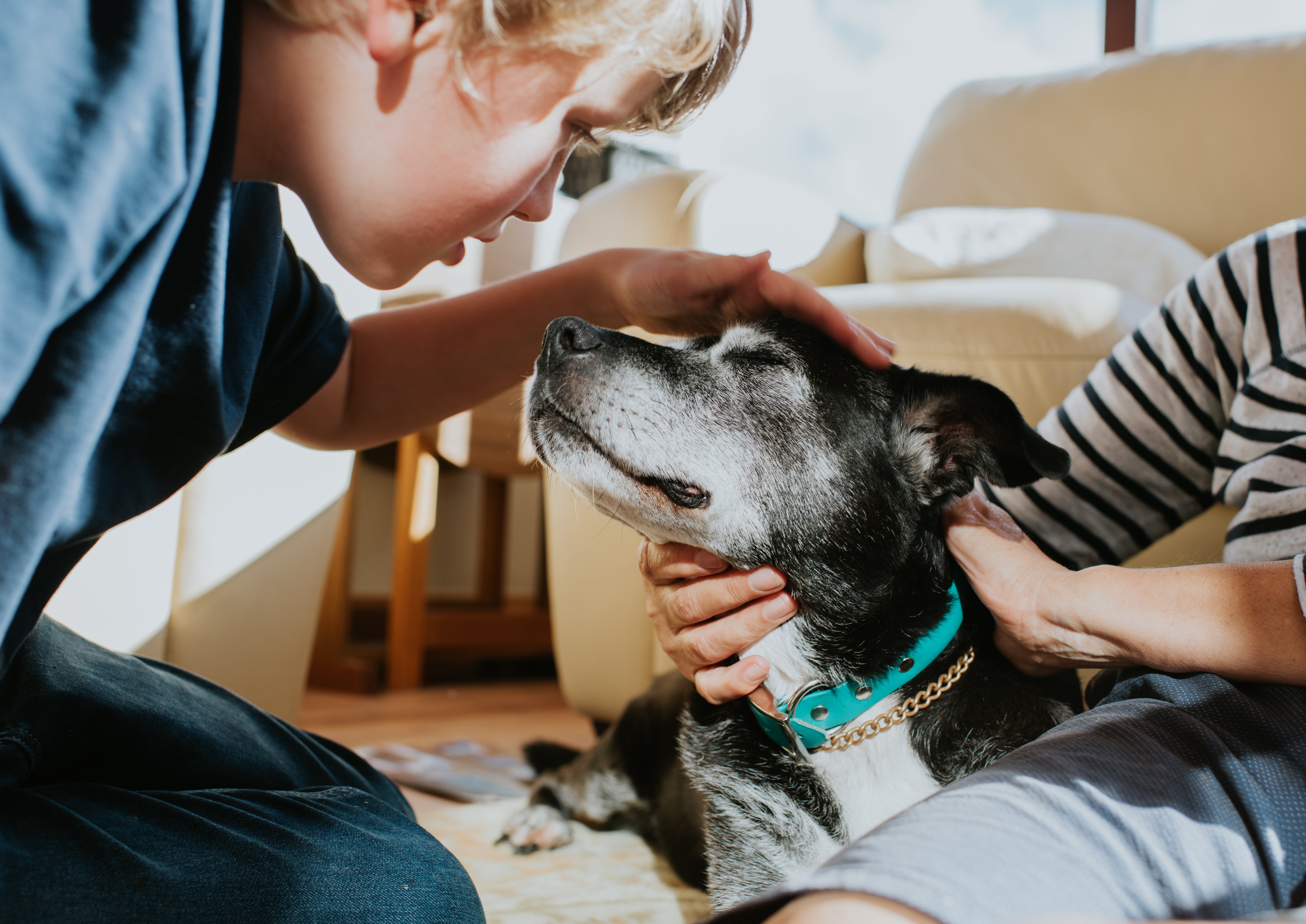
Bringing Home a Senior Dog (7+ Years)
☐ Choose a vet within the first week to discuss existing health conditions and preventive care for seniors and establish a visit cadence. Senior dogs often need more vet visits, including dental care visits.
☐ Consider switching to a senior dog food, as these formulas often have different nutrients and minerals geared specifically towards senior dogs. After speaking with your vet, buy a senior-specific food and create a plan for transitioning to a new food if applicable with your vet’s guidance. This process can take 4 to 7 days, and moving too quickly can upset their stomachs.
☐ Ease them into your home; consider introducing one room at a time so as not to overwhelm them. The
first days with a senior dog can be hard for everyone adjusting.
☐ Go slowly and have no expectations with introductions, as senior dogs might be anxious and have established behavioral patterns.
☐ Do an audit of your home and consider how a senior dog might move around; for example, think about whether they’ll be able to climb stairs, or whether you need to put rugs down on slick flooring for arthritic dogs.
☐ Establish and keep a consistent routine;
senior dogs are sensitive to change.
Cat Life Stage Comparison Table
| | Kitten (Under 1 year) | Adult (1–7 years) | Senior (7+ years) |
|---|
| Food type | Kitten-specific formula, feed them smaller meals more frequently | Depends on lifestyle and breed; one to two times a day | Senior-specific formula that is easy to digest |
|---|
| Activity level | High energy, with multiple play sessions needed per day for bonding and socialization | Depends on breed, although most cats need some sort of enrichment and movement to prevent obesity and boredom, which can lead to destructive behavior | Low to moderate, with short and gentle play sessions |
|---|
| Training focus | Handling and litter box, redirecting scratching to desired items like scratching posts | Positive reinforcement training to build on what they already know | Focus on consistency and patience |
|---|
| Vet cadence | Frequently as directed by your vet, to discuss spaying or neutering, vaccine schedules, flea, tick, and heartworm prevention | Once a year for a wellness exam, plus any dental cleanings | As directed by your vet for preventive care and established health issues |
|---|
| Sleep needs | 16 to 20 hours a day, as rest helps their developing bodies and brains | 12 to 16 hours a day depending on breed as some are more active at night | 16 to 20 hours per day, watch for confusion |
|---|
| Best for | Active households who can work to establish a routine and provide plenty of stimulation | Dependent on breed, lifestyle, and the cat’s previous socialization | Quieter homes and experienced owners who are prepared to handle the extra care an elderly cat needs |
|---|
New Cat Checklist by Life Stage
Adopting a kitten, adult cat, or senior cat is noble and joyful, but it does take additional things to think about to make sure you and your cat are set up for success.
Bringing Home a Kitten (Up to ~1 Year)
☐ Choose a vet for your new pet and visit them within the first week of bringing your kitten home to discuss spaying or neutering, food and diet, vaccine schedules, and flea, tick, and heartworm prevention.
☐ Cat-proof your home, including places higher than you think, as kittens are good climbers and jumpers.
☐ Create a plan for transitioning gradually to new food, if applicable. Switching too quickly can give cats an upset stomach. It’s not uncommon for transitions to take longer for some cats, and never mix foods in the same bowl, like you would with a dog.
☐ Decide on a kitten-specific food after speaking with your vet.
☐ Offer a safe space for your cat, such as a cat bed.
☐ Decide where your scratching posts, trees, and other large items will go.
☐ Bring only kitten-safe toys into the home; items like string toys could be choking hazards.
☐ Establish an area for your litter box that is easily accessible to them and begin training your cat.
☐ Choose an age-appropriate litter. If your new friend is less than 4 to 6 months of age, a non-clumping litter is often recommended to prevent them from curiously chewing on and accidentally swallowing litter clumps.
Bringing Home an Adult Cat (1–7 Years)
☐ Ask the shelter or previous owner about any behavioral issues or trauma that might inform how your cat gets adjusted.
☐ Choose a vet and visit them within the first week to discuss any health conditions.
☐ Create a plan for transitioning gradually to new food, if applicable. Switching too quickly can give cats an upset stomach. It’s not uncommon for transitions to take longer for some cats, and never mix foods in the same bowl like you would with a dog.
☐ Decide where vertical spaces, such as cat trees or shelving, will go. Cats like to have safe zones.
☐ Identify where you want to provide behavioral outlets like scratching posts to help prevent behavioral issues.
☐ Keep a consistent routine. Adult cats do best in stable environments.
Bringing Home a Senior Cat (7+ Years)
☐ Ask the shelter or previous owner about any behavioral issues or trauma to better understand your cat.
☐ Choose a vet and visit them within the first week. You’ll need to establish more frequent preventive care appointments and have them look over your senior cat for any health problems, including dental issues.
☐ Create a plan for transitioning gradually to new food, if applicable. Switching too quickly can give cats an upset stomach. It’s not uncommon for transitions to take longer for some cats, and never mix foods in the same bowl like you would with a dog.
☐ Set up an easy-to-access space for them, such as low-profile litter boxes, a bed that doesn’t require jumping, and food and water bowls or fountains at ground level.
☐ Identify where you want to provide behavioral outlets like scratching posts to help prevent behavioral issues.
☐ Keep a consistent routine. Senior cats do best in stable environments.
Puppies and kittens, adult cats and dogs, and seniors are all available for love. Which one fits best for your lifestyle will depend on many factors. Being prepared to bring them home, especially within the first three days, three weeks, and three months, can make all the difference in their ability to thrive. Check out our Ultimate Adoption Checklist for more tips.