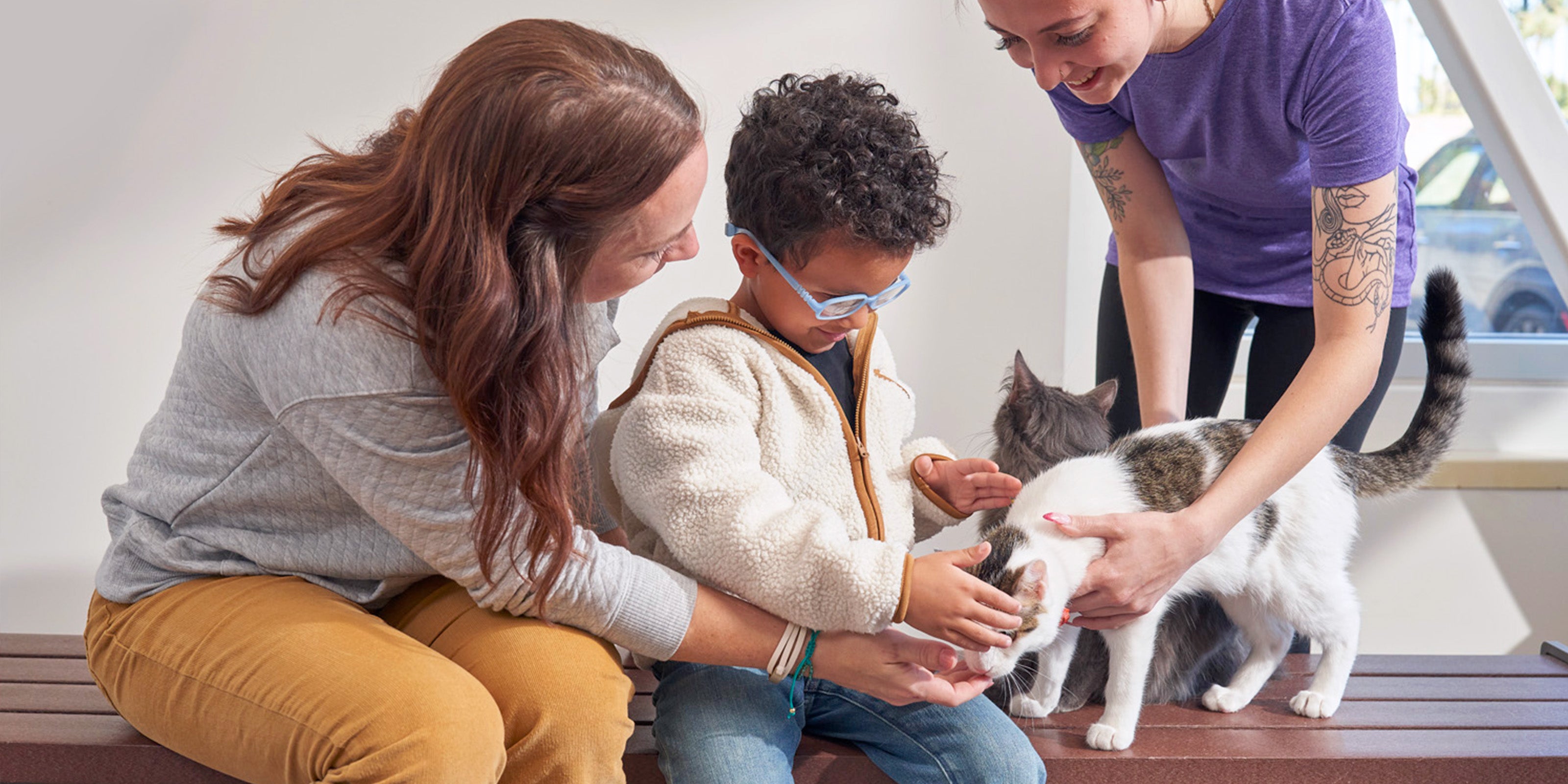
There are close to 4,000 animal shelters in the United States, and 56% are designated as no-kill shelters with a save rate of 90% or higher. Learn what it means when a shelter is identified as no kill, why the no-kill movement is important for pets, why animals are relinquished to these facilities, and how to search for adoptable pets at no-kill animal shelters.
What is a No-Kill Shelter?
What does “no-kill shelter” mean? Generally, a no-kill shelter is a facility where 90% or more of the animals taken in are treated, rehabilitated, saved, and adopted out to loving homes. Often, they are limited-admission facilities, taking pets that can be treated and rehomed.
The concept of no-kill shelters can be traced back to San Francisco in the 1980s. The community and shelters came together to respond to the overwhelming number of healthy animals that were being euthanized across the country.
As communities became committed to save and find homes for treatable and healthy pets, the no-kill shelter concept gained traction across the country. The percentage of U.S. shelters known to be no-kill has more than doubled from 24% in 2016 to 57% in 2022. Today, roughly 43% of counties in the U.S. are no-kill counties.
Relinquishment of Pets
Many of the animals found at no-kill and other shelters are owner-surrendered or relinquished. When a pet is surrendered, it’s often a tragedy for the family and pet. As sad as it is, shelters would much rather accept a relinquished pet, and try to find the pet find a new home, than have the owners abandon the pet.
The reasons why families surrender their pets are varied. Some of the more heartbreaking reasons why pets are relinquished include:
- The death of the pet owner with no family members willing or able to take the pet
- Elderly owners moving into a nursing facility or hospice care
- Families moving to an apartment or other location that won’t accept pets
- Owners becoming homeless themselves
- Financial hardship
In other cases, the pet may not fit with the family dynamic, it is too aggressive and needs behavioral training, it requires medical care, or someone in the family develops an allergy to the pet.
Owner surrenders are rising in the post-COVID era, as many people adopted or bought pets to keep them company during lockdowns. Once these people returned to work, they no longer had the time or capacity to take care of their pets. Across the country, lockdown pets have been surrendered, generating a spike in surrender rates.
Most no-kill shelters will accept owner-surrendered pets, depending on need and capacity. If you find yourself in a situation that requires surrender, check with shelters and rescues in your area about their acceptance policies. Many may offer help to keep the animal homed, such as low-cost spaying and neutering, tips for common behavioral issues, and suggestions for finding pet-friendly apartments and communities.