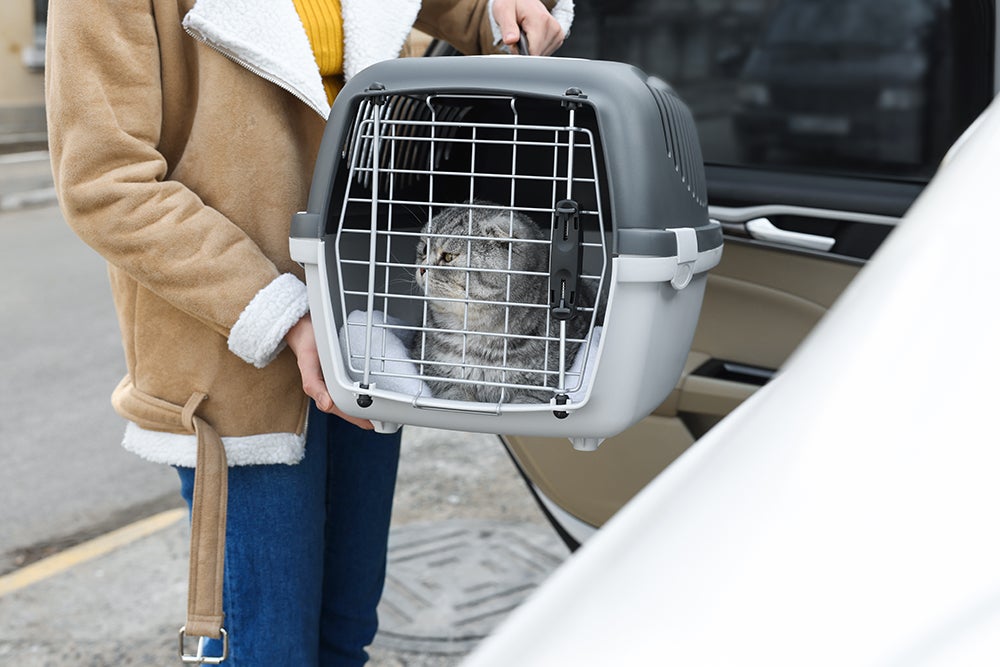
Bringing a new cat home can be an exciting, yet stressful experience. Adding a road trip to the mix can add another layer of anxiety. If you’re wondering how to travel long distances with cats in a car and are even asking yourself, “Do cats like car rides?”, then rest assured that with careful preparation, car travel with your feline can be a smooth and even enjoyable experience.
Here are some true tips and tricks for transporting cats in cars and making the experience stress free for your new companion. For one, getting your cat comfortable with the cat travel carrier helps a lot when it comes time to hit the road. This is why we decided to provide a guide that discusses all about getting a cat used to a car, choosing the right carrier for your cat, and how to take a cat on a road trip. You will also find some good advice on preparing for the trip, whether it’s from packing the right supplies to planning pit stops.
Get Cat Used to the Car
As a new cat owner, you may be a bit nervous about how your kitten will handle car rides. You may even wonder, “Can cats get used to car rides?” While many felines instinctively dislike being in the car, especially for longer road trips, they can learn to become comfortable with car travel. Here’s some advice to help you achieve just that.
Learning how to get cats comfortable with car travel can make a world of difference! Here’s the advice to follow:
- Start young: Kittens usually adjust to new experiences and surroundings more easily than adult or senior cats, so start the travel-training process as early as possible. If your cat is past kittenhood, don’t worry. Adult and senior cats can still learn to tolerate car rides.
- Rule out motion sickness: If your cat already has difficulty traveling in the car, ask your vet whether your cat could be getting motion sickness. Symptoms include drooling, nausea, vomiting, and diarrhea. If you suspect your cat is getting motion sickness, your vet may recommend a medication to treat nausea. Never give your cat medication without asking your vet first.
- Practice getting in the car: Bring your cat, secured safely in their carrier, out to your car (with its engine off). Strap them in with a seatbelt and sit next to them. If your cat is calm, give them their favorite treat. Repeat, gradually increasing the time they wait in the car until they get treats. If they seem upset or try to get out, don’t give them a treat and try again with less time in the car. When you bring them back into the house, let them out calmly and without fanfare.
- Practice turning on the engine: After your cat learns that sitting in the carrier in the car is okay, try turning on the engine before giving them treats. Add this to your routine, rewarding calm behavior with treats and stopping when you observe nervous behavior.
- Practice driving around the block: Once your cat can stay calm while you have the engine on for a few minutes, try driving around the block, then treat your cat. After they’ve eaten the treat, bring them back inside and let them out. If your cat did well on that short trip, repeat the process, gradually increasing the distance you drive and rewarding your cat for staying calm. Having a second person to treat your cat while driving can help.
- Practice driving at different speeds and around corners: After your cat’s a pro at handling going around your neighborhood, try driving one exit on a highway and/or a short distance on a winding road. Once you’re in a safe place to stop, pull over and treat your cat if they’ve done well.
- Practice driving to your vet’s office: Get them used to your route to and from the vet’s office by following the same routine described above, rewarding calm behavior.
Choosing the Best Cat Carrier for the Car
Choosing the right cat carrier is crucial for safe and comfortable car travel, and as a new cat owner, you’ll quickly learn its importance. You might be wondering, “What’s the best cat carrier for my car?” To help your cat learn to like their carrier, follow these steps:
- Size is key: To find the best cat carrier for a road trip, ensure the carrier is big enough for your cat to sit, lie down and turn around easily.
- Cleaning the cat carrier: It needs to be easy. Pick one with a removable, washable liner for simple cleanup.
- Carrier training: Before your first trip, introduce your cat to the carrier by placing treats and toys inside, which can help them feel comfortable.
- A safe cat carrier: This is also very significant. There are some carriers which are highly rated for their car safety in the event of an accident. It would be best to choose one of these carriers, so you can rest assured that your cat is safe and sound during their travels.
With these tips, you’ll feel confident and prepared for your cat’s first car ride. Choosing the best carrier and training your cat will make all the difference in ensuring a smooth and comfortable trip for both of you.
How to Plan a Road Trip with Your Cat
This tried-and-true road trip checklist for traveling with cats in a car long distance will help you have a stress-free ride. Here’s how to plan a road trip with a cat:
- Talk with your veterinarian: Check with your veterinarian that your cat is healthy enough to travel and learn what to do if your feline experiences car sickness, stress, or anxiety during their travels. The vet may have some great insights on potential medications, calming supplements, or other products that could keep your kitty feeling healthier during these trips.
- Check identification: Check that your cat wears an easy-to-read collar tag. Remember also to check that your cat’s microchip information is current.
- Plan pit stops: Plan to stop every 2-3 hours to give your cat water and access to the litter box.
- Pack extra supplies: If your cat needs special food or medicines, pack extra to avoid emergencies.
- Confirm your hotels: Call and confirm that any hotels you’ll be staying at will also allow cats in their rooms.
- Prepare for stress: If your pet tends to be easily stressed, talk to your vet about possible medical help, such as calming supplements.
- Before you drive off: Exercise your cat by playing with them before you leave. Also, give them some food and water (unless your veterinarian directs you to do otherwise).
- Keep your cat in the carrier: Restrain your feline while in the car to avoid accidents and to keep them safe. Make sure they are fully secured during transitions to and from the car and other destinations.
- Never leave your cat in the car! Cars heat up fast, and your cat’s life could be in danger in only a matter of minutes. During any car travel, you should never leave a pet in a car.
Bringing Home a Newly Adopted Cat or Kitten
Bringing home your newly adopted cat or kitten can be an exciting yet stressful experience, particularly during that first drive. It’s normal for your new feline friend to react differently in the car; some may be silent, while others might meow or even howl, but this is all part of the adjustment process. They will often settle down once they feel secure in their new environment. Having the right cat carrier is essential for easing this stress. Some adoption agencies provide them at the time of adoption; however, many require you to provide your own appropriately sized carrier before taking your cat home. An appropriately sized carrier will help keep your new pet safe and comfortable during the drive, reducing their anxiety. Remember, even if your cat hasn’t built a positive association with the carrier yet, it is a secure space to help them feel more at ease on the journey.
For more expert tips with information about your cat, explore our other cat and kitten information articles.