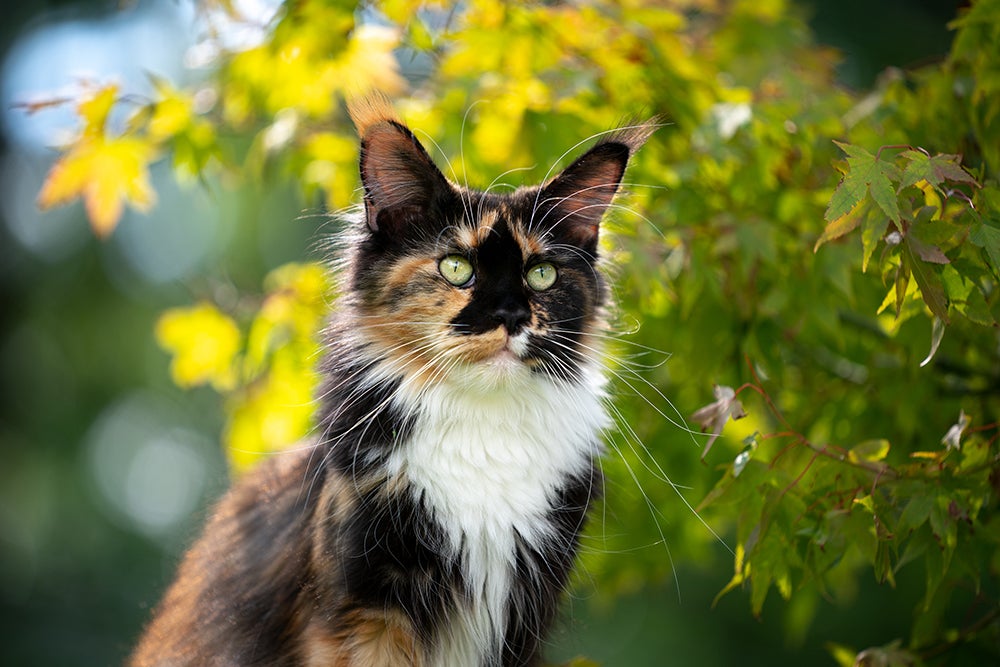
One of the most captivating things about cats is the stunning variety of their cat fur patterns. From the intricate stripes of a tabby to the patchy masterpiece of a calico, a cat’s fur is its signature. But these beautiful cat colorations are more than just decoration. In fact, they are a fascinating story written in genetics.
Whether you’re trying to identify the pattern of your newly adopted kitty or are simply curious about the different types of cat coats, this guide will walk you through the most common cat colors and patterns that make each feline a unique work of art.
Decoding the Patterns: 6 Common Cat Fur Pattern Types
While there are seemingly endless combinations of colors of cat fur, most cat patterns fall into a few recognizable categories. Learning and understanding these cat fur pattern names is the first step toward identifying and appreciating the many unique cat coat patterns that exist.
The Tabby Pattern: More Than Just Stripes
The tabby is one of the most recognizable and widespread cat fur patterns, appearing in countless breeds as well as mixed-breed cats. In fact, it’s often considered the “default” among cat fur pattern types because the tabby gene is so dominant in feline genetics. Rather than referring to a single look, “tabby” describes a group of cat coat patterns defined by specific markings and features.
All tabbies share a few key traits:
- The signature “M” marking on the forehead
- Dark lines around the eyes, sometimes resembling eyeliner
- Faint striping on the legs and tail
- A lighter underside compared to the back
These shared features make tabbies easy to identify, even as their cat colorations and patterns vary widely.
The following are four main types of tabby color variations that help these lovable beauties shine:
- Mackerel Tabby (“Tiger Cat”): Often called the “tiger cat,” this cat coat pattern features narrow, vertical stripes running down the sides to their stomach. These stripes resemble a fish skeleton like a mackerel fish, which is how the pattern got its name. It’s one of the most common cat patterns seen in domestic cats and is what most people think of when they picture a tabby cat.
- Classic Tabby (“Blotched Tabby”): Instead of stripes, this pattern features bold, swirling patterns on the cat’s sides, often looking like a marble cake or a bullseye. Many even have a “butterfly” pattern across their shoulders that extends into the swirls on the sides of the tabby. It is one of the most eye-catching cat coat patterns for tabbies, resembling something Van Gogh might paint.
- Ticked Tabby (“Agouti Tabby”): This is one of the more subtle types of cat fur patterns. At first glance, a ticked tabby might not look like a tabby at all. Rather than visible stripes or spots on the body, their cat fur appears solid from a distance. However, a closer look soon reveals that individual hairs on the cat have alternating bands of light and dark coloring, thus giving them a soft and finely textured striped appearance. Finally, the facial “M” on the tabby is the biggest giveaway as this feature becomes more prominent the closer you get.
- Spotted Tabby: Instead of continuous stripes, spotted tabbies have broken markings that appear as spots. These can range from small and delicate to large and bold, giving the cat a wild, cheetah-like look.
- Rosette Tabby: This is a specific type of spotted tabby, which has a unique variation where the spots form large, two-toned shapes called rosettes. The rosette pattern is like the spots seen on wild leopards and similar wild cats, where there is a light spot with a darker outline around it. These striking cat fur patterns are most common in breeds like Bengals and are prized for their exotic, high-contrast appearance among cat coat patterns.
Solid Color Cats
Solid color cats are one of the most visually striking cat color types, defined by a single, uniform shade across the entire coat with no obvious stripes, spots, or patches. These cats may look simple at first glance, but their sleek, even appearance makes them one of the most elegant and timeless examples of cat coat colors. In the broader world of cat fur patterns, solid coats represent minimalism with their genetics, producing a clean, uninterrupted look rather than complex markings.
Solid cats can appear in a wide range of shades, representing many of the most common cat colors seen around the world. The following are a few examples of solid color fur types:
- Black: Deep, glossy coats that often appear almost blue under sunlight
- White: Pure, bright coats caused by pigment suppression
- Blue (Gray): A soft, diluted black that creates a smoky appearance
- Cream: A pale, diluted red tone with a warm, soft look
- Red (Orange/Ginger): Vibrant warm tones ranging from deep copper to light apricot
These variations showcase the wide spectrum of colors of cat fur, even within a single category of coat type.
Within solid color cats, there can be subtle variations in how the pigment appears along each hair shaft. One of the most interesting of these is the “tipped color effect,” where the base of the hair is one shade, but the tips are slightly lighter or darker. While the cat still appears “solid” at a distance, this effect adds depth and shimmer to the coat upon closer inspection. The following are a few examples of this:
- Shaded coats: Where the majority of the hair is light, but the tips are darker
- Smoke coats: Where the base of the fur is pale and the tips are heavily pigmented, creating a dramatic contrast when the cat moves
- Chinchilla-style tipping: Extremely light base color with only the very ends of the fur showing pigment, producing a sparkling, almost silver appearance
Tipped color effects aren’t the only unique phenomenon within the solid fur type spectrum. While solid cats are defined by the absence of visible markings, many still carry hidden genetic traces of cat fur pattern types. These are known as “ghost tabby patterns.”
Ghost markings include the following:
- Faint, shadow-like stripes or spots
- Most visible in kittens, especially in natural lighting
- Often located on the legs, tail, or forehead
- Sometimes fading as the cat matures
These subtle features reveal an important truth about cat fur patterns: Even solid coats can carry the genetic blueprint for more complex cat coat patterns underneath.
Despite their simplicity, solid cats still play an important role in understanding cat colors and patterns, as they help highlight how diverse feline genetics truly are across different types of cat coats.
Bicolor Cats: From Tuxedos to Harlequins
Bicolor cats, also known as “white spotting,” are a widely recognized group within cat fur patterns, defined by coats that feature two distinct colors. The pattern most commonly occurs when a cat has white combined with another shade such as black, gray, orange, or cream, creating an array of bicolor fur effects. These different cat colorations can vary dramatically in how the colors are distributed, ranging from nearly even splits to coats that are almost entirely white with just small patches of color.
Unlike solid coats, bicolor cat coat patterns are shaped by how pigment cells migrate during early development. This leads to highly variable and often unique cat patterns, meaning no two bicolor cats look exactly alike. In the broader spectrum of cat colors and patterns, bicolor coats are among the most diverse and visually dynamic.
There are several well-known cat fur pattern names that stand out in the bicolor cat world due to their distinct and recognizable appearances:
- Tuxedo: One of the most iconic cat coat patterns, tuxedo cats are mostly black with crisp white markings on the chest, belly, paws, and sometimes the face. Their formal appearance resembles a suit, making them one of the most easily identified cat colorations.
- Van: The van pattern is the opposite extreme of many bicolor types. These cats are predominantly white, with color restricted mainly to the head and tail. This creates a striking, high-contrast look that emphasizes symmetry and balance within this cat fur pattern.
- Cat Harlequin: The cat harlequin pattern is one of the most visually dramatic and relatively rare cat color types. These cats are mostly white but feature several large, irregular patches of color scattered across the body. Unlike the structured look of tuxedos or the limited markings of van cats, harlequins display a more random, artistic distribution of color.
In the wider world of cat colors and patterns, bicolor cats represent a perfect balance between simplicity and individuality. They offer an endless combination of colors of cat fur while still maintaining a recognizable structure for everyone to love.
The Tortoiseshell (“Tortie”) Cat
The tortoiseshell cat, commonly called a “tortie,” is one of the most distinctive and visually dynamic examples of cat fur patterns. Instead of having clearly separated patches of color like bicolor cats, tortoiseshells display a beautifully blended mix of black and red (orange) tones woven together across the coat. This creates a rich, textured appearance that looks almost like brushstrokes of paint layered over the fur.
In the broader study of cat coat patterns, tortoiseshell cats stand out because their coloration is not organized into defined sections. Instead, the colors are intermingled at a fine level, making each cat’s coat completely unique and unpredictable. This makes them one of the most expressive forms of cat colorations found in domestic cats.
Tortoiseshell cats have several defining traits that help distinguish them from other cat fur pattern types:
- Brindle or marbled appearance: The coat looks blended, with black and orange (or red) interwoven in irregular patterns rather than solid patches. This creates a rich, multidimensional effect within their cat colors and patterns.
- Little to no white: Traditional tortoiseshell cats typically contain very little white fur. When white is present in larger amounts, the cat is usually classified as a calico rather than a tortie.
- Genetic chromosome link (almost always female): One of the most fascinating aspects of tortoiseshells is their genetics. The genes responsible for the black and orange pigmentation are linked to the X chromosome. Because females have two X chromosomes, they can express both colors simultaneously. Male tortoiseshell cats are extremely rare and usually result from genetic anomalies, often being sterile.
The complexity of their cat fur makes them a perfect example of how genetics can produce highly varied and unexpected results in types of cat coats. No two torties ever look exactly alike, reinforcing their status as one of the most unique and admired cat colors and patterns in the feline world.
Calico and Tricolor Cats
Calico cats are one of the most visually striking examples of cat fur patterns, instantly recognizable for their bold patchwork coats made up of three distinct colors. Closely related to tortoiseshell cats, Calicos differ by the addition of white, which creates clear separation between the colored patches. This extra color transforms the blended look of a tortie into a more defined and structured form of cat coat patterns, making calicos stand out as one of the most iconic cat color types.
Unlike more blended cat colorations, calico coats are made up of large, well-defined areas of color. This creates a “quilt-like” appearance where each shade remains visually distinct, showcasing the dramatic variety found in cat colors and patterns.
Calico cats come in several variations, each representing different expressions of cat fur pattern types:
- Standard Calico: This classic version features white, black, and orange (red) patches. These colors are typically bold and high contrast, forming one of the most recognizable common cat colors combinations in domestic cats.
- Dilute Calico: This version has a softer, more muted variation where traditional colors are lightened by dilution genes. Instead of black and orange, dilute calicos display gray (often called blue), cream, and white. This creates a more pastel-like appearance while still maintaining the distinct color structure that calico cats are known for.
Calico patterns are closely linked to genetics and are almost always found in female cats due to the same X-chromosome color inheritance seen in tortoiseshell cats. The white spotting gene plays a key role in calico formation by blocking pigment in certain areas of the coat as well. This interaction between genes produces some of the most visually complex types of cat fur, combining both color blending and sharp separation within a single coat.
Because of this genetic interaction, calico cats are a perfect example of how multiple inheritance factors contribute to the wide range of cat fur pattern names seen across domestic cats.
What makes calico cats especially fascinating within the world of cat coats is the contrast between their colors. The white areas act as natural borders, separating black and orange (or diluted tones) into distinct sections. This results in a highly structured form of cat fur patterns that feels almost artistic in its composition.
The Color Point Pattern
The color point pattern is one of the most visually striking and genetically fascinating cat fur patterns, known for its elegant contrast between a lighter body and darker extremities. In this pattern, a cat’s face, ears, paws, and tail, collectively known as the “points,” are significantly darker than the rest of the body, creating a refined and highly recognizable silhouette within cat coat patterns.
Unlike other cat patterns that rely on stripes, spots, or patches, color point cats display a smooth gradient effect driven entirely by temperature-sensitive pigmentation. This makes it one of the most unique types of cat fur in the feline world.
According to the Cat Fanciers’ Association (CFA), the color point pattern is a type of partial albinism caused by a mutated, temperature-sensitive enzyme involved in melanin production. This genetic trait results in pigment developing only in cooler areas of the body, while the warmer regions remain lighter.
Key reasons behind this effect include:
- Cooler extremities produce more pigment: The ears, face, paws, and tail are naturally cooler than the core body, allowing darker coloration to develop in these areas.
- Warmer torso suppresses pigment: The body’s central warmth inhibits pigment production, resulting in a lighter coat across the main body.
This interaction between temperature and genetics creates one of the most distinctive cat colorations seen in domestic cats. In turn, depending on the cat colors and patterns that come out of this unique genetic mutation, pointed cats can also be called “color points,” “tortie points,” “lynx points,” or even “torbie points”. This only further displays the artistic diversity within the color point pattern spectrum.
The color point pattern is strongly associated with several well-known breeds that highlight the elegance of this cat fur pattern type:
- Siamese: One of the most iconic examples, known for high-contrast points and vivid blue eyes
- Ragdoll: Typically softer in contrast, with a more muted and plush appearance
- Birman: Features symmetrical white “gloves” along with darker points
- Himalayan: A Persian-type cat with long fur and dramatic color points
These breeds help showcase the wide range of expression within cat coat colors, from high-contrast dark points to more subtle shading variations.
Although the structure of the pattern remains consistent, color point cats can display many different cat color types, including:
- Seal point (dark brown/black points)
- Blue point (gray points)
- Chocolate point (warm brown tones)
- Lilac point (soft pinkish-gray tones)
- Red or cream points
These variations expand the diversity of colors of cat fur, proving that even a single pattern can produce a wide spectrum of appearances.
Among all cat fur pattern types, the color point pattern stands out for its subtlety and elegance. Rather than relying on bold markings or sharp contrasts across the body, it creates a gentle transition between light and dark areas, emphasizing facial structure and eye color.
This makes color point cats one of the most refined examples of cat coat patterns, often admired for their symmetry, softness, and striking visual balance.
Does Coat Color Predict Personality?
There’s a long-standing belief that certain cat color types come with built-in personality traits. For example, people believe that orange cats are extra friendly or that torties have some serious “tortitude.” While these ideas are fun and widely shared, there’s no scientific evidence linking cat fur patterns or cat colorations to behavior. In reality, a cat’s personality and temperament are more shaped by their genetics, early socialization, and individual life experiences as opposed to the color of its fur. While it’s tempting to associate certain cat patterns with specific behaviors, personality is ultimately individual. Two cats with identical cat fur pattern types can have completely different temperaments, making each kitty their own unique individual.
Caring for Different Cat Fur Types
Beyond the wide variety of cat colors and patterns, the length and texture of cat fur types are just as important and are a key indicator of its overall health. Whether your cat has a sleek, short coat or long, flowing fur, proper maintenance is essential for keeping all cat coats healthy and comfortable.
The following discusses the best methods of maintenance for fur types:
- Shorthaired cats are efficient self-groomers and require less maintenance. However, they will still benefit from weekly brushing to remove any loose hair, reduce shedding, and minimize hairballs.
- Longhaired cats, like Persians or Maine Coons, require more frequent, even daily, brushing to prevent their cat fur from developing painful mats and tangles. Depending on the situation, a longhaired cat may even require more intense detangling, trimming, and occasional professional grooming.
For more detailed advice, check out these essential cat grooming tips. A consistent grooming routine is a wonderful way to bond with your cat while keeping them healthy and beautiful.
Every Coat Tells a Story
From the familiar stripes of a tabby to the rare and eye-catching cat harlequin, the range of all colors of cats is truly extraordinary and a vision of art. Each coat is a beautiful reflection of their unique genetic makeup that is able to combine various cat fur patterns, textures, and shades into a one-of-a-kind design.
When you take the time to understand cat colors and patterns, it does more than help you identify your cat’s appearance. It deepens your appreciation for the incredible diversity found across the feline world. Whether you’re exploring the many types of cat fur that exist, comparing different cat colorations, or simply learning the nuances of cat coat colors, every detail learned is another detail that adds to the rich story of your kitty’s coat. As a result, you begin to cherish the depths of history that your cat’s coat tells.
In the end, while it’s fun to identify the specific cat fur pattern your feline friend wears, remember that their true character lies in their individual personality. No matter the pattern, color, or texture, every cat carries a unique blend of traits and holds differing experiences that can’t be replicated, thus proving that in the world of cats, no two kitties are ever exactly alike. Every cat is special inside and out, from their stunning coats all the way to their one-of-a-kind personalities. That’s part of what makes cats so exceptional.
For more expert tips explore our other cat fact articles, or if you're ready to find your new best friend, view pets for adoption on Petfinder.com.