Adopting a new cat or kitten is an exciting time, and gathering all the wonderful supplies to enhance your pet’s new home can be a lot of fun. There’s so much to explore, such as food, litter, toys, a cozy bed, nail clippers, a grooming brush and, of course, a scratching post! Choosing the right scratching post can be a wonderful adventure, as you’ll find various sizes, shapes and materials to consider. By thinking about what your cat enjoys, you can make this decision easier and more enjoyable. If you’re wondering how to get cats to use a scratching post, here are some tips to encourage your feline friend to embrace it!
Understanding Why Cats Scratch
Why do cats scratch? Cat scratchers are essential for any healthy, well-adjusted cat. Cats must have an outlet for their urge to scratch, so providing a post can save your furniture, drapery and carpeting from destruction. Cats also use their scratching post for stretching and exercise, so obtaining a suitable post is vital to a cat’s health and well-being.
All cats have claws on their front and rear paws. The rear ones are primarily for itching and climbing, while the front claws help a cat catch and hold onto prey. Both front and rear claws can also be used as defense if necessary. Like human fingernails, cat claws continue to grow throughout a cat’s life and need regular attention. Most cats care for this by using their teeth to pull at their rear claw sheaths, revealing the sharp new claws underneath.
Why do cats love scratching posts? It’s easier to hook their front claws in some material and pull them downward, pulling off the old sheaths to expose the new claws. A scratching post accomplishes this.
Best Types of Cat Scratching Posts
Some of the types of cat scratching posts include:
- Cardboard cat scratcher
- Pros: Easily replaceable; many cats love it
- Cons: Cheap material; not all cats enjoy it
- Sisal rope cat scratcher
- Pros: Some cats enjoy the grip
- Cons: Some cats dislike the texture
- Wood cat scratcher
- Pros: Sturdy
- Cons: It may be hard for cats to scratch
- Carpet cat scratcher
- Pros: Can be very satisfying for your cat
- Cons: It may tempt cats to scratch any other carpet in the house
- Vertical scratching post
- Pros: Vertical cat scratching post offers resistance to cats’ claws
- Cons: Not all cats enjoy it
- Horizontal scratching post
- Pros: A cat scratcher, when horizontal, can help deter cats from scratching carpets or rugs
- Cons: Not all cats enjoy it
- Slanted cat scratcher
- Pros: Slanted cat scratching post provides space for cats to stretch
- Cons: Not all cats enjoy it
- Cat lounger
- Pros: Cats may also lay on the furniture-shaped “cat scratching lounge”
- Cons: Not all cats enjoy it
- Cat wall climbers (or a wall-mounted cat scratcher)
- Pros: Wall-mounted scratching posts often offer space for cats to climb, explore and rest
- Cons: A cat wall scratching post might not be large enough for the cat to scratch comfortably
Why do outdoor cats like scratching posts? Outdoor cats typically use tree stumps or a wood scratching post to sharpen their front claws. If a cat has spent time outside, they may enjoy scratching a post of wood. Instead of getting pre-made cat trees, that scratching post made of wood could function as a real cat tree, reminding them of the great outdoors.
Some cat lovers bring firewood or small stumps into their homes for their cats to enjoy. Others purchase scratching posts or larger cat towers made from natural logs to offer their cat a tall scratching post.
Another material of choice is a corrugated cardboard cat scratcher. Economical cardboard posts are easy to replace and appeal to many cats. Usually, they lie flat on the floor and may come with a toy attached to entice a kitty to scratch at them. Since many cats enjoy cardboard posts and they’re often inexpensive, first-time cat owners often start with this option before graduating to more elaborate and pricey cat furniture.
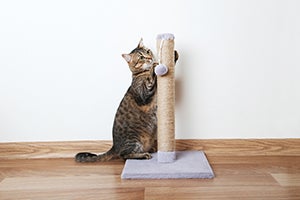
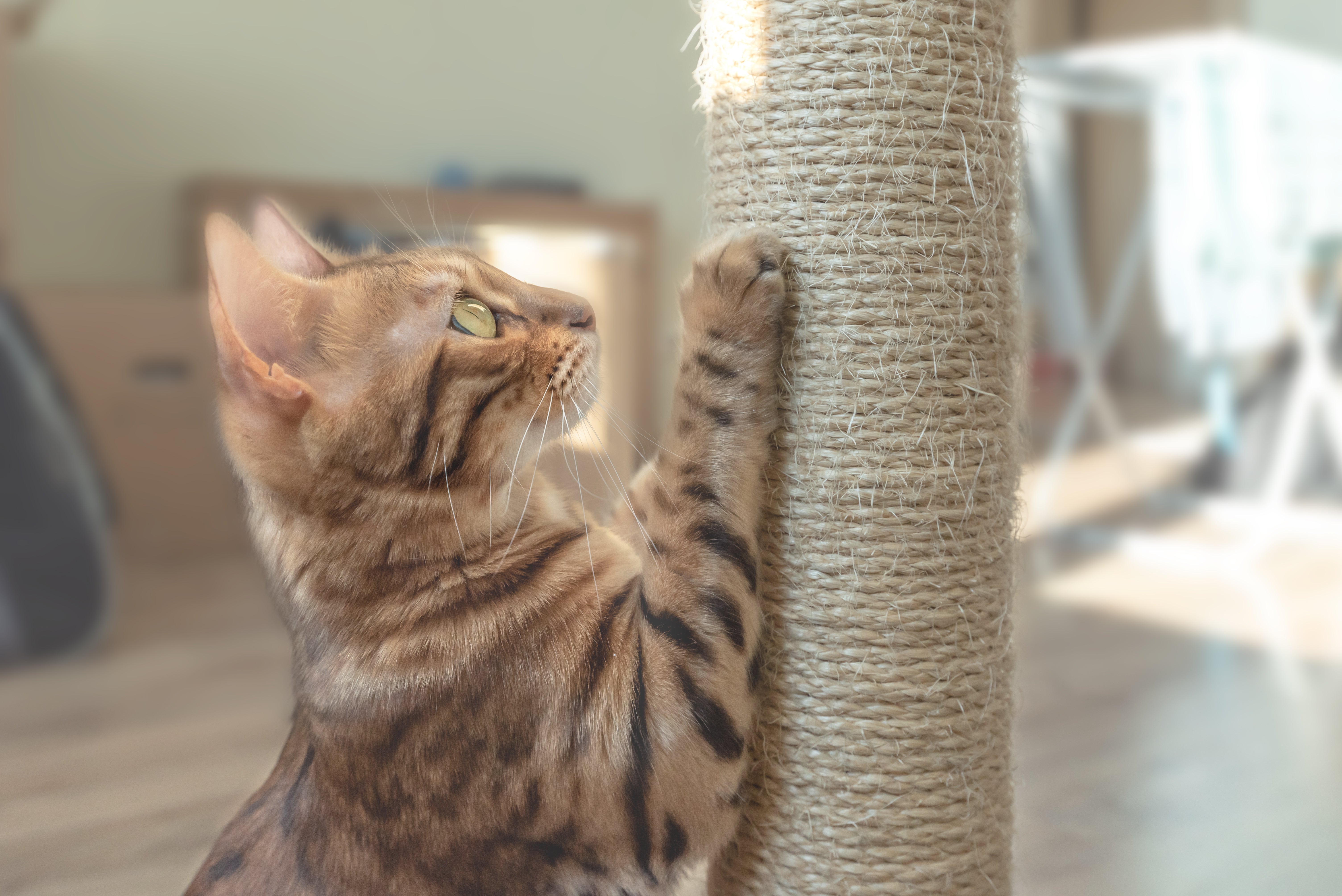
A cat post covered with rough sisal rope is another popular option. The rope scratching post accomplishes the same purpose as tree bark outside – it catches the front claws so the cat can pull downward and release the sheath to expose the new claw underneath. Sisal rope posts cost more than disposable cardboard, but they’re durable and last for years before they need replacement. Many cats enjoy using posts covered in sisal.
Some scratching posts sold in stores are covered with carpeting. While a carpet cat scratching post accomplishes the same purpose as sisal, it often resembles the carpeting on staircases and home floors. Some cats may not distinguish between the carpet on their carpet scratching post and that in the rest of the house. These cats often pull at carpeted stairs and floors and usually benefit from a switch to a post made from a different material.