Branson
- Adult
- Male
- Medium
- Domestic Short Hair
About Branson
Anoka, MN
Breed
Physical Traits
Behavior
Health
Adoption Fee
$275
Petfinder recommends that you should always take reasonable security steps before making online payments.
Branson's Story
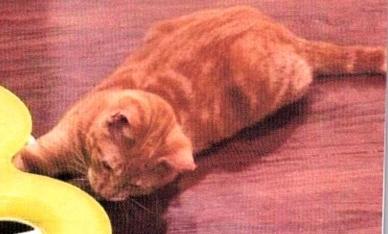
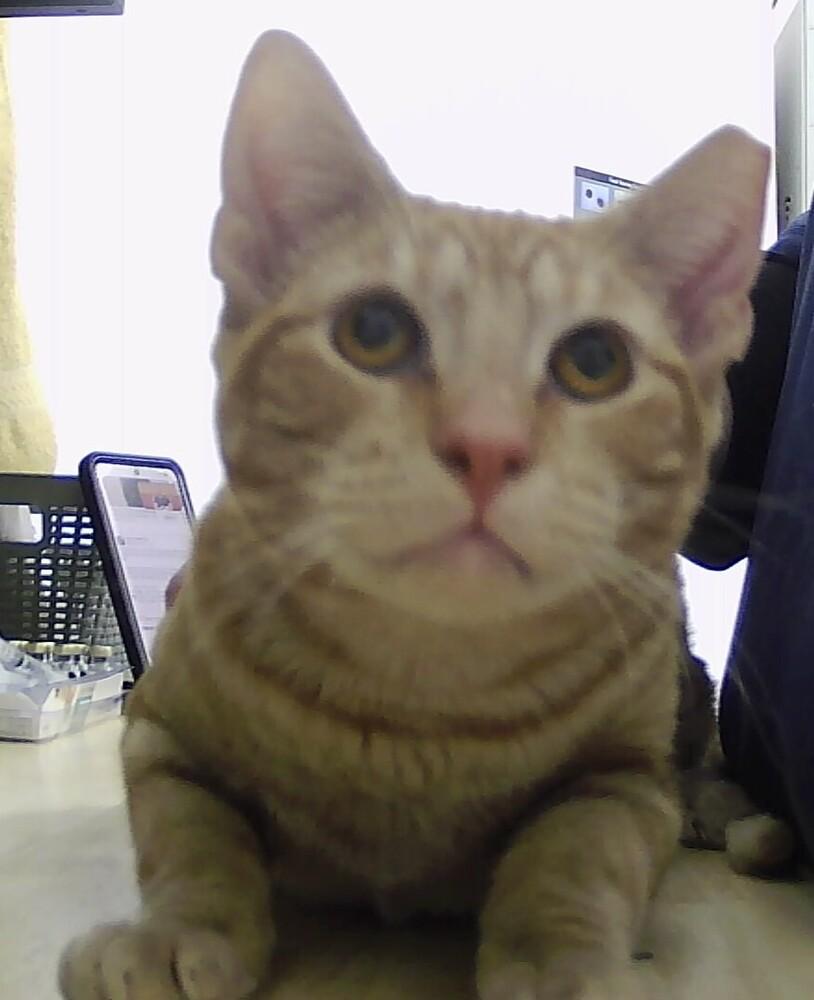
Hi, I'm Branson, a cheerful 8-month old orange tabby boy with bright stripes and an even brighter personality. I'm friendly, affectionate, and always ready to be your loyal companion. I was picked up in a trap/neuter/return operation, but my sweet nature and outgoing personality convinced the rescuers that I should not be returned to a feral colony. I like all kinds of people and I enjoy playing with other cats. If you're looking for a warm, loving, and playful orange tabby, I'm your guy. I can't wait to find my forever home and share all my love with you! <br/><br/>I have a mild form of CH - cerebral hyperplasia. See the back of my kennel card for more information (or below). It does not stop me in any way - I just need a little more calm home and still have LOTS of love to give you! <br/><br/>Cerebellar hypoplasia is a developmental condition in which the cerebellum fails to develop properly. The cerebellum is the portion of the brain that controls fine motor skills, balance, and coordination. The condition is not painful or contagious. What causes cerebellar hypoplasia? Cerebellar hypoplasia most commonly occurs when a pregnant cat becomes infected with feline panleukopenia virus (FPV) and passes the infection to her unborn kittens. The panleukopenia virus preferentially attacks rapidly dividing cells. During the perinatal period (i.e., in the last weeks of pregnancy and the first weeks after birth), the cerebellum is undergoing rapid growth and development, making it vulnerable to attack by the virus. The condition may only affect one kitten in a litter or may involve all littermates. What are the symptoms? The cerebellum is responsible for purposeful movement and coordination, so the symptoms of this condition may not become apparent until the kitten starts to stand or walk on its own. The severity of the symptoms depends on how much of the cerebellum is affected and at what stage in the kitten's development the infection occurred. Typical symptoms are jerky or uncoordinated walking, swaying from side to side when trying to walk, a goose-stepping gait called hypermetria, mild head tremors and/or intention tremors. Intention tremors occur when the kitten intends to make some sort of movement. Intention tremors may be present to a minor degree when the kitten walks but will usually become more pronounced when the kitten tries to do something more involved, such as playing with a toy or bending over to drink or eat out of a bowl. How is this condition diagnosed? Cerebellar hypoplasia cannot be detected using routine laboratory tests. In some cases, MRI (magnetic resonance imaging) may show that the kitten has a smaller-than-normal cerebellum. What is the treatment? Since the condition is caused by a lack of development of the brain, there is no treatment. Are there any other causes of this condition? It is possible that a kitten could develop cerebellar hypoplasia if its mother is severely malnourished during her pregnancy or if the kitten suffers a physical trauma to its brain at the time the cerebellum is developing. Other inflammatory diseases of the brain may cause similar symptoms (e.g., toxoplasmosis infection); however, the most common cause of this condition, by far, is infection with panleukopenia virus. How can this condition be prevented? This disease can be prevented by vaccinating female cats against panleukopenia prior to pregnancy. What is the prognosis? Kittens with cerebellar hypoplasia are not infectious to other kittens or cats, are not in any pain, and will learn to adapt to their disability over time. They can safely be spayed or neutered but must be kept indoors, as they are prone to losing their balance and could easily be injured or attacked. If a cat's symptoms are pronounced, they may require special modifications in their home environment, including dishes raised off the floor for easier access. Although some kittens may be more prone to minor injuries associated with falls, all of them are able to have a normal life expectancy, provided they are given some extra tender loving care.<br/><br/>I am available for adoption at the Maplewood PetSmart. Stop by to meet me and take me home!
Hi, I'm Branson, a cheerful 8-month old orange tabby boy with bright stripes and an even brighter personality. I'm friendly, affectionate, and always ready to be your loyal companion. I was picked up in a trap/neuter/return operation, but my sweet nature and outgoing personality convinced the rescuers that I should not be returned to a feral colony. I like all kinds of people and I enjoy playing with other cats. If you're looking for a warm, loving, and playful orange tabby, I'm your guy. I can't wait to find my forever home and share all my love with you!
I have a mild form of CH - cerebral hyperplasia. See the back of my kennel card for more information (or below). It does not stop me in any way - I just need a little more calm home and still have LOTS of love to give you!
Cerebellar hypoplasia is a developmental condition in which the cerebellum fails to develop properly. The cerebellum is the portion of the brain that controls fine motor skills, balance, and coordination. The condition is not pain
Hi, I'm Branson, a cheerful 8-month old orange tabby boy with bright stripes and an even brighter personality. I'm friendly, affectionate, and always ready to be your loyal companion. I was picked up in a trap/neuter/return operation, but my sweet nature and outgoing personality convinced the rescuers that I should not be returned to a feral colony. I like all kinds of people and I enjoy playing with other cats. If you're looking for a warm, loving, and playful orange tabby, I'm your guy. I can't wait to find my forever home and share all my love with you!
I have a mild form of CH - cerebral hyperplasia. See the back of my kennel card for more information (or below). It does not stop me in any way - I just need a little more calm home and still have LOTS of love to give you!
Cerebellar hypoplasia is a developmental condition in which the cerebellum fails to develop properly. The cerebellum is the portion of the brain that controls fine motor skills, balance, and coordination. The condition is not painful or contagious. What causes cerebellar hypoplasia? Cerebellar hypoplasia most commonly occurs when a pregnant cat becomes infected with feline panleukopenia virus (FPV) and passes the infection to her unborn kittens. The panleukopenia virus preferentially attacks rapidly dividing cells. During the perinatal period (i.e., in the last weeks of pregnancy and the first weeks after birth), the cereb
Consider Branson for adoption?
Help with Branson's care
How To Adopt
Branson is from Angel of Hope Animal Rescue
[Anoka, MN]
Consider Branson for adoption?
Help with Branson's care