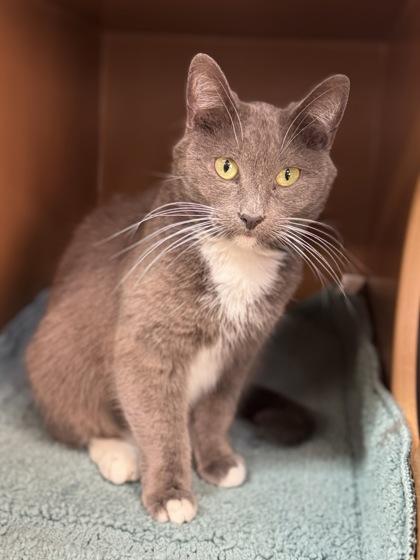
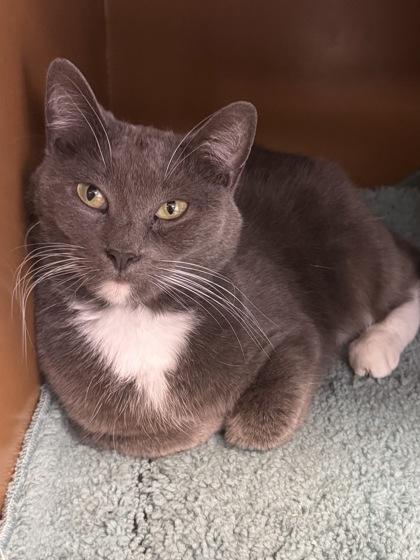
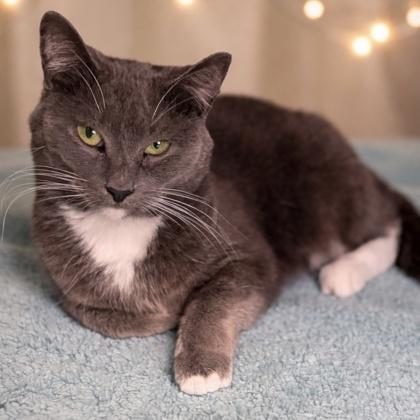
Chestnut (Barn Cat)
- Adult
- Female
- Medium
- Domestic Short Hair
- Domestic Short Hair
About Chestnut (Barn Cat)
Seneca, SC
Breed
Physical Traits
Behavior
Health
Petfinder recommends that you should always take reasonable security steps before making online payments.
Chestnut (Barn Cat)'s Story
Chestnut is a spicy kitty who occasionally enjoys pets. She came from a home with another female kitty. Chestnut is ready to join an indoor/outdoor or barn home where she can do her own thing on her own time!<br/><br/>*The single most important thing you can do to help your new cat is to KEEP THEM IN THEIR CRATE OR CONFINED SPACE for 2-4 weeks. (Two weeks is the minimum, 4 weeks is optimal.) Your new cat is very frightened and confused right now. If you let them out before the 2-4 week time period is up, they will most likely run away.<br/>Feed and clean their litter box and provide fresh water daily. Most cats will stay at the back of their crate or inside their hiding box while you feed them and clean their box. If left in a room, they will most likely run and hide when you open the door. Most will not try to escape, but always use precaution.<br/>While you are feeding your new barn cat, talk to them and make "kitty kitty" calls so they learn that the sound of your voice means food. At the end of the 2-4 week confinement period, simply leave the crate or barn door open and allow the cat to come out at their own pace. Leave the crate in place and continue feeding nearby. Often the cat will continue to use the crate to sleep.<br/>After they have been released, continue to provide food and water daily. Cats cannot live on mousing alone and they will leave your barn/building for greener pastures if you do not provide cat food. They will still hunt rodents if you feed them. Cats also need shelter from the elements and protection from predators, so make sure they can get back in their building at all times.
Chestnut is a spicy kitty who occasionally enjoys pets. She came from a home with another female kitty. Chestnut is ready to join an indoor/outdoor or barn home where she can do her own thing on her own time!
*The single most important thing you can do to help your new cat is to KEEP THEM IN THEIR CRATE OR CONFINED SPACE for 2-4 weeks. (Two weeks is the minimum, 4 weeks is optimal.) Your new cat is very frightened and confused right now. If you let them out before the 2-4 week time period is up, they will most likely run away.
Feed and clean their litter box and provide fresh water daily. Most cats will stay at the back of their crate or inside their hiding box while you feed them and clean their box. If left in a room, they will most likely run and hide when you open the door. Most will not try to escape, but always use precaution.
While you are feeding your new barn cat, talk to them and make "kitty kitty" calls so they learn that the sound of your voice means food. At the end of the 2-4 week confinement
Chestnut is a spicy kitty who occasionally enjoys pets. She came from a home with another female kitty. Chestnut is ready to join an indoor/outdoor or barn home where she can do her own thing on her own time!
*The single most important thing you can do to help your new cat is to KEEP THEM IN THEIR CRATE OR CONFINED SPACE for 2-4 weeks. (Two weeks is the minimum, 4 weeks is optimal.) Your new cat is very frightened and confused right now. If you let them out before the 2-4 week time period is up, they will most likely run away.
Feed and clean their litter box and provide fresh water daily. Most cats will stay at the back of their crate or inside their hiding box while you feed them and clean their box. If left in a room, they will most likely run and hide when you open the door. Most will not try to escape, but always use precaution.
While you are feeding your new barn cat, talk to them and make "kitty kitty" calls so they learn that the sound of your voice means food. At the end of the 2-4 week confinement period, simply leave the crate or barn door open and allow the cat to come out at their own pace. Leave the crate in place and continue feeding nearby. Often the cat will continue to use the crate to sleep.
After they have been released, continue to provide food and water daily. Cats cannot live on mousing alone and they will leave your barn/building for greener pastures if you do not provide
How To Adopt
Chestnut (Barn Cat) is from Oconee Humane Society
[Seneca, SC]
Consider Chestnut (Barn Cat) for adoption?
Help with Chestnut (Barn Cat)'s care